

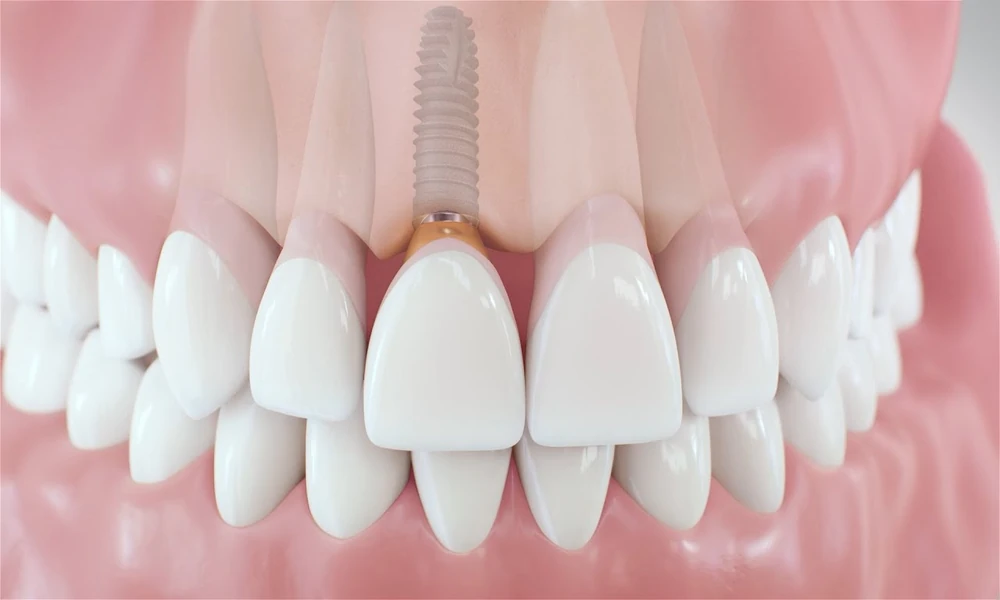
Partially, and the useful answer is not a single percentage, because an implant is billed as four or five separate procedures that your plan categorizes differently. The extraction might be covered at 80 percent, the 3D scan at 100 percent with a frequency limit, the implant itself at 50 percent, and the bone graft not at all. Patients who ask an implant practice such as Stubbs Dental for a stage-by-stage breakdown against their benefits usually find their plan pays more toward some steps and nothing toward others, which changes how treatment gets sequenced.
Which stages of implant treatment get covered separately?
Each procedure falls into its own benefit category, and the percentages differ. A typical PPO plan handles them roughly like this:
- Cone beam 3D scan, usually diagnostic, often 80 to 100 percent but limited to once every three to five years
- Extraction of the failing tooth, usually basic or oral surgery, commonly 70 to 80 percent
- Bone graft or socket preservation, inconsistently handled, sometimes major services and sometimes excluded as not medically necessary
- Implant placement, almost always major services at 50 percent when covered
- Custom abutment and implant crown, major services at 50 percent, occasionally with the crown covered while the post is excluded
Reading the plan this way explains quotes that seem contradictory. A patient told they have no implant coverage may still have 80 percent coverage on the extraction and the scan, which is several hundred dollars they would otherwise pay.
What does “covered at 50 percent” actually mean?
Fifty percent of the plan’s allowed amount, not 50 percent of the fee your dentist charges. The allowed amount is the maximum the insurer recognizes for a procedure, and anything above it is either written off by a contracted provider or billed to you by a non-contracted one.
An example makes the gap obvious. If an office charges $2,400 for an implant and the plan’s allowed amount is $1,600, a 50 percent benefit pays $800, not $1,200. Whether you owe $800 or $1,600 on the rest depends entirely on whether that office has a contract with your carrier.
Why does the in-network status of a practice like Stubbs Dental change your bill?
Because the contracted fee reduction often exceeds the insurance payment itself. Providers who sign a PPO contract agree to a discounted fee schedule and write off the difference, which lowers your share even on procedures the plan does not cover at all.
Using the numbers above, an in-network office writes off $800 before benefits are applied. An out-of-network office can bill you that $800 as a balance, and some plans reimburse out-of-network care at a maximum allowable charge that is lower still, widening the gap. Ask any practice, Stubbs Dental included, which carriers and networks they participate with before assuming a quoted fee is what you will owe, and ask whether they file claims on your behalf or expect you to submit them.
What limits catch people even when implants are covered?
Frequency limitations and downgrades, both of which are easy to miss. A plan covering cone beam imaging once every five years will deny a second scan taken for a different site, so imaging sequence matters when treatment happens in stages.
Downgrade provisions work similarly. Some plans reimburse a porcelain implant crown at the rate for a base metal crown, or pay toward what a partial denture would have cost rather than an implant, a practice called an alternate benefit. The claim gets paid, just at a lower number than the coverage table implies. Annual maximums, commonly $1,000 to $2,500, then cap whatever survives those adjustments.
Can you time enrollment or treatment to get more paid?
Yes, and open enrollment is the leverage point most people waste. If implant treatment is on the horizon, compare plan options in the fall for coverage that starts January 1, looking specifically at the annual maximum, the waiting period on major services, and whether a missing tooth clause excludes teeth already lost.
Two other timing moves are worth knowing. Splitting treatment across two benefit years puts extraction and grafting under one annual maximum and placement under the next. Some carriers also run maximum rollover programs, which carry unused benefit dollars forward if you had a cleaning and stayed under a spending threshold that year, so a patient who maintains routine care may enter treatment with a larger maximum than the plan advertises. Both require checking your own contract language rather than assuming.
Coverage for implants exists in more plans than it used to, though what arrives is shaped by procedure categories, allowed amounts, and network status rather than by a headline percentage. Get a written treatment plan with every procedure code listed, ask your carrier or the treating office what the allowed amount is for each one, and confirm network participation before scheduling. Whether you consult Stubbs Dental or another implant practice, that stage-by-stage estimate is what turns a coverage question into an actual number.
